Essay · 6 min readVol. 3 of 11
Are You Building an Energetic Frog or a Fat F***ing Tadpole?
Why size alone isn’t transformation.
Begin readingIn 1912, the biologist J. F. Gudernatsch made a curious discovery about tadpoles. When fed thyroid gland tissue, they leap ahead in their development, transforming into frogs earlier than nature intended. The thyroid hormone acts like a developmental switch, boosting metabolism and triggering the metamorphosis into adult form.
Add an anti-thyroid chemical, however, and the transformation stalls. The tadpoles keep growing, becoming fatter, heavier, and more grotesquely swollen, but they never become frogs. When that switch is blocked, growth loses its direction.
Without a change in form or function, growth is just more of the same thing, only bigger.
Growth Without Change
The biologist-philosopher Ray Peat once wrote, in an email:
Bodybuilding, like success in business, is something that tends to give me aphasia.
In other words, some growth is so hollow it leaves you speechless.
Bodybuilding and rapid business scaling often get celebrated as markers of ambition. But when the goal is simply to get bigger, growth can turn pathological. In nature, unchecked and undirected growth becomes cancer. Without something like thyroid hormone to guide energy towards differentiation and transformation, all you get is bulk without progress:
- Ideas that spread widely but change nothing, like viral trends that vanish without impact.
- Businesses adding headcount but not capability, as expansion outpaces systems and collapses under its own weight.
- Bodies that gain mass but lose function, built for size but prone to injury.
- Knowledge that expands but doesn’t improve judgement.
- Skills that improve on paper but fail under real-world pressure.
The shape stays the same. Only the size changes.
Surplus Energy and the Fat Tadpole
The French philosopher Georges Bataille explored a parallel idea in his book The Accursed Share (1949). He argued that all living systems generate more energy than they need to survive, and that the surplus has to go somewhere. Channelled well, it builds complexity and drives transformation, much like a tadpole becoming a frog. Left unfocused, it merely inflates what’s already there, until it spills out destructively as waste, war, or pathological growth.
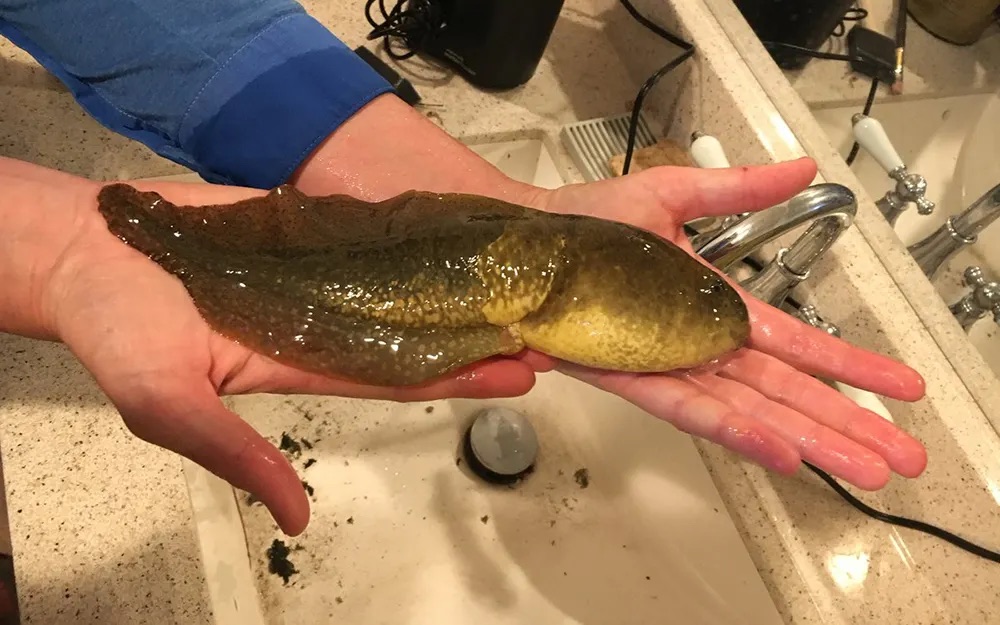
The same dynamic shows up in human and organisational systems. In business, well-directed surplus creates resilience and new opportunities, as when a company pivots into a new model. Misused, it fuels bureaucracy, bloat, and inefficiency. In bodybuilding, it produces size without usable strength. This is the difference between simple expansion and genuine integration.
Complexity as a Sign of Maturity
Seen through a syntropic lens, growth is more than getting bigger. It’s the emergence of new structure, new connections, and new capabilities. Yet in much of modern business culture, especially the West Coast scale fast mindset, complexity is treated as a flaw or a liability. Simplicity gets worshipped for its speed and its lack of friction.
But the right kind of complexity, the interwoven kind that comes from integrating parts into a coherent, resilient whole, is a hallmark of maturity. Mature systems are specialised, interdependent, and adaptive. They’re intricate, yet capable.
Biologically, it’s like moving from a lump of undifferentiated cells to an organism with functioning organs, nerves, and feedback loops. The former grows quickly but is fragile. The latter develops more slowly, but it adapts and endures.
The Arc of Healthy Growth
True development moves from simplicity to structured complexity, from mere size to new capability. This is the path from tadpole to frog: potential realised through transformation, not just accumulation.
In nature, transformation often means slowing raw expansion so energy can be redirected into building new structures. Thyroid hormone accelerates growth while also changing what’s being built, forming limbs and lungs rather than just swelling existing tissue.
The same applies in business, in creative work, and in personal development. Sometimes the wisest move is to pause expansion and invest in the systems and structures that will sustain the next stage. Without that, growth doesn’t make you stronger, more adaptable, or more capable. It simply weighs you down.
The Big Question
Patterns like this turn up everywhere: in work, in health, in organisations, in ideas.
So which path are you on? Are you building the kind of wisdom, capacity for change, and resilience that lets you leap, adapt and thrive? Or is your energy simply inflating what’s already there: a bigger form, but no new function? What we call a fat f***ing tadpole (FFT).
Growth without change doesn’t carry us forward. Only new structure, new capability and new form will take us somewhere worth going.
The back pocketNo need to bring it back.
Finished? Stamp the slip, and the shelf will remember you’ve read it.