Essay · 6 min readVol. 9 of 11
The Jazz Organisation
What Mae-Wan Ho understood about coherence that most leaders don’t.
Begin readingI have no doubt that life is quantum coherent. Organisms are quantum jazz players, dancing life into being.
Mae-Wan Ho
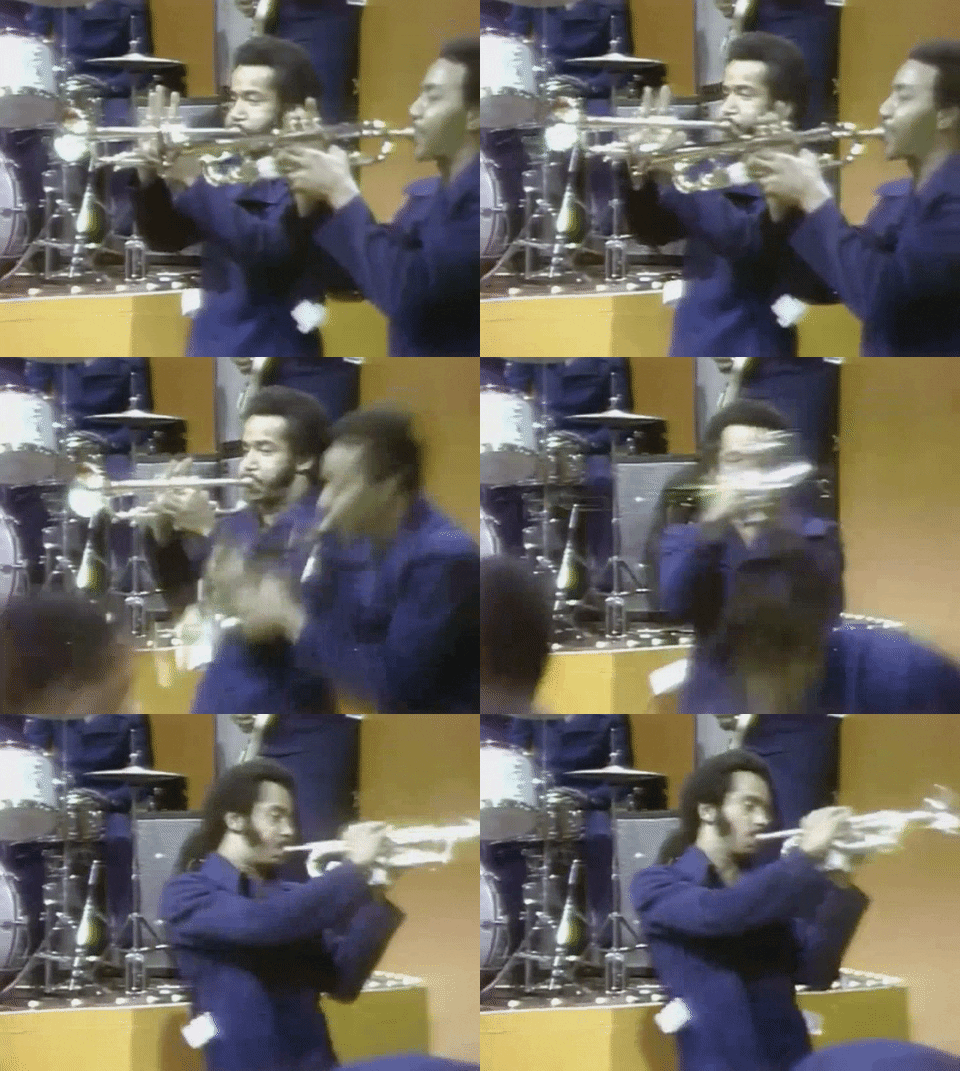
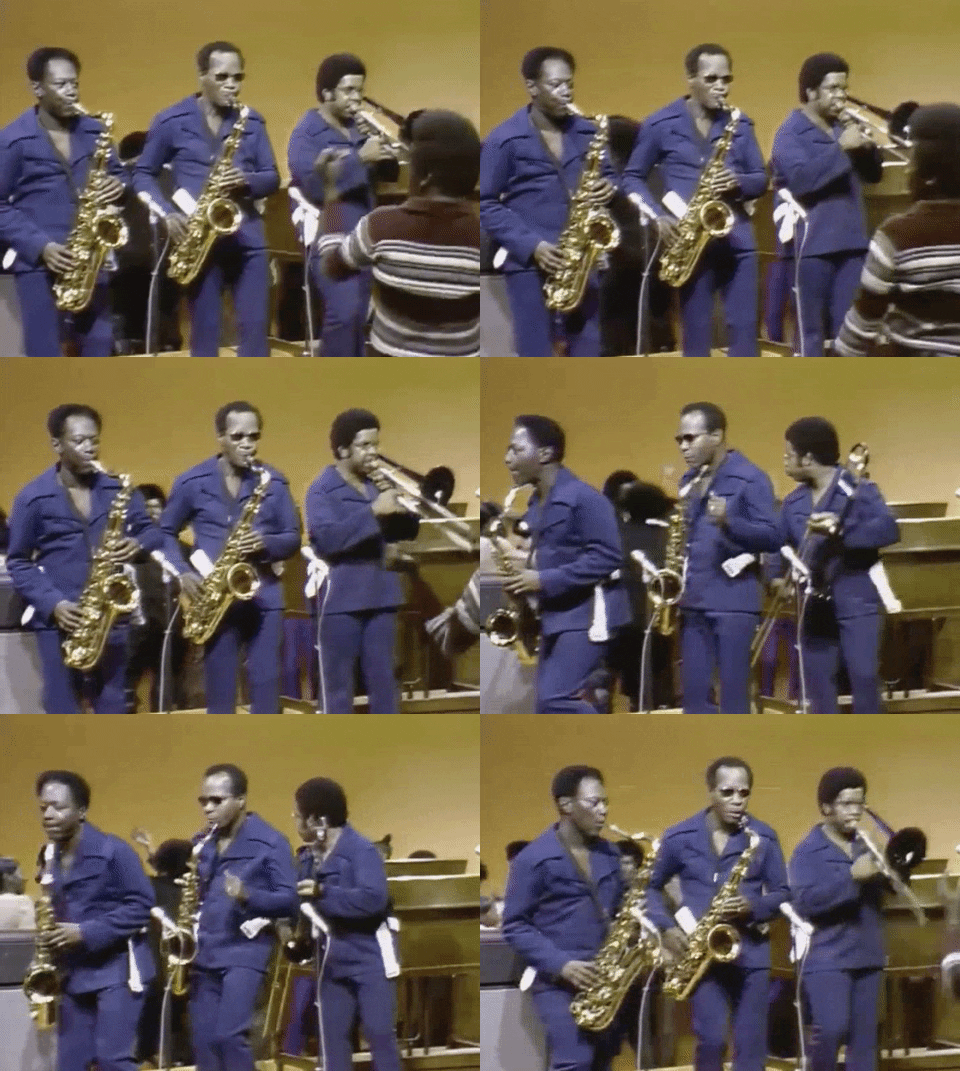
Jazz has form. It has timing, memory, discipline, and listening. It also has freedom. A player doesn’t just execute a score. The music emerges between the players, each one vibing off and responding to what the others are doing while contributing something of their own. There’s structure, yes, but nobody controls every note.
The biophysicist Mae-Wan Ho (1941-2016) thought living organisms worked in much the same way. Every molecule, cell, tissue, and organ takes part in a vast improvisation. Each part has its own rhythm and activity, and yet somehow the organism moves as a whole. No conductor stands outside the body telling each cell what to do.
Ho described this as a state that maximises both global cohesion and local freedom. That phrase is worth taking seriously if you run anything.
Most organisations assume the two pull against each other. Give people more freedom and you risk fragmentation. Strengthen the organisation and freedom gets restricted. Leaders are told to pick a spot on the line between control and chaos.
Living systems suggest something else.
In a healthy organism, the parts don’t surrender their distinctiveness in order to belong. A heart cell stays different from a liver cell, and neither behaves as an isolated individual. The cell becomes fully itself through participating in the organism. This is interdependence, and it’s a different animal from independence.
The same thing happens in good jazz. Each musician has considerable freedom, but that freedom isn’t permission to ignore everyone else. It depends on heightened sensitivity to timing, tone, rhythm, atmosphere, and to what the other players are doing.
The better they listen, the more freely they can play.
Control isn’t coherence
Plenty of leaders try to manufacture cohesion through control. More procedures, approval stages, reporting systems, targets, scripts, competencies, and performance measures. Communication deteriorates, so they add another meeting. Trust declines, so they demand more evidence. Something unexpected happens, so they tighten the rules.
The organisation gets more ordered on paper and less alive in practice.
People stop sensing and responding because they’re waiting for instructions. Information travels up to someone who supposedly sees the whole, then decisions travel back down. Those closest to the situation gradually lose the confidence to act. You get compliance. Coherence is another matter.
A machine can be controlled from outside because its parts are passive. An organisation is made of living, perceiving people. They interpret what’s happening, form relationships, notice local changes, and possess knowledge no central authority can ever fully gather. Treating them as machine parts doesn’t make the organisation more intelligent. It disables much of the intelligence already sitting inside it.
Ho contrasted mechanical systems, based on hierarchies of controllers and controlled, with organic systems characterised by intercommunication and participation. In her organism, every participant is responsive to the whole and active in shaping it.
None of which means abandoning structure. Jazz musicians still need discipline. They need enough familiarity with one another to anticipate what’s coming. Freedom without relationship just means everyone playing their own tune.
The task of leadership is to cultivate conditions where cohesion and freedom develop together, rather than trading one off against the other.
From directing to attuning
This changes the central question.
Instead of asking how you get everyone to behave in the way the organisation needs, you might ask what would allow people to perceive the whole and respond intelligently from where they stand.
Which means a strong shared orientation without prescribing every movement. People need to understand what the organisation is trying to serve and how their work connects to it. They also need room to interpret, adapt, challenge, experiment, and act on what they can actually see.
The leader stops being a controller standing outside the system and becomes a participant helping the organisation hear itself. The questions change accordingly.
- Where has information stopped moving?
- Which voices have gone quiet?
- Where are people complying in public and resisting in private?
- Which procedures once supported the work but now get in its way?
- Where has fear made the organisation less responsive?
These are questions of coherence, not control.
The organisation as a living whole
We’re not saying an organisation is literally an organism. The metaphor has limits, and it turns dangerous the moment it’s used to suggest individuals should sacrifice themselves to some higher corporate body.
But it catches what the machine metaphor misses. Organisations are continually made and remade through relationships. Their real form isn’t in the organisational chart. It emerges through thousands of conversations, judgements, tensions, habits, and responses nobody writes down. Like music, the organisation happens between its participants.
So the healthiest, most syntropic organisation isn’t the one where everybody thinks alike and waits for the next instruction, nor is it the one where everyone is left alone to pursue their own interests. It’s the one capable of sustaining global cohesion and local freedom at the same time.
Enough structure to hold the music together. Enough freedom for something new to arrive.
Stop conducting. Teach them to listen.
The back pocketNo need to bring it back.
Finished? Stamp the slip, and the shelf will remember you’ve read it.